We are thrilled to be launching Phase II of our Huobi Knights Global Recruitment Program during our inaugural meetup in London on April 17.
We hope to expand our Knights community into Europe and hope that you will join us!
Huobi Knights is our community of enthusiastic supporters who love blockchain and digital assets. All of our Knights believe in the power of digital currency and enjoy the company of like-minded people.
Our Knights participate and aid in the globalization of Huobi and become special members of our community.
The Duties of a Huobi Knight
Huobi Knights’ duties include:
● Watch trends — Knights closely watch trends to help Huobi understand the cryptocurrency market’s needs around the world.
● Test function — Knights help test the latest features and versions of Huobi.pro providing valuable feedback to our developers.
● Organize activities — Knights organize online and offline events, and meetups in local areas and maintain a social media presence.
● Be a mentor — Knights help others learn more about blockchain and digital assets. They also have the opportunity to become a mentor at The Huobi Business School.
Benefits For Our Knights
Once accepted to the Huobi Knights Program, members receive exclusive benefits, including:
● Identity Authentication — Knights will receive an official Huobi Knight certificate and medal, as well as occasional gift boxes.
● Meet Crypto Icons — Knights will be invited to participate in an exclusive Huobi Business School course — and the lecturer is a digital currency icon. After completing the course you will receive a certificate.
● Partners — Huobi Knights have the opportunity to become partners of Huobi.
● Global Visit — Knights can visit the Huobi offices of Hong Kong, Singapore, Japan, South Korea, or the US.
● Meet-ups — Huobi organizes a minimum of one meet-up every quarter for our Knights. Huobi executives of Huobi and influential icons of the industry also attend these meetups.
● Early Access to Platform Updates — Knights can participate in every update of Huobi.pro, and give their opinion and feedback to the Huobi team.
● First to know — Knights will be the first to have access to the research reports and industry developments that Huobi will circulate in the community.
Come and Join the Huobi Knights!
The Huobi Knights Global Program is open to anyone regardless of location, age, sex, or occupation! The only requirement is that participants should enjoy learning about and have a basic understanding of the blockchain and digital assets. They should also have integrity, innovation, an open mind and the ability to manage a community.
To join, please apply via this form:
For more details about the program please join us at our first London Meetup on April 17. Space is extremely limited so please to attend.
We look forward to seeing you in London!

Businesses looking to give their bottom line a boost should consider cryptocurrency. As cryptocurrencies like bitcoin grow in popularity as a mainstream form of payment, businesses can capitalize on a new target audience, among other profitable benefits.
Cryptocurrencies are digital currencies built around a technology called blockchain.
This allows cryptocurrencies to operate in a decentralized manner, which means that they are independent of major banks and other traditional financial institutions.
In addition to verifying transactions, blockchain technology plays a crucial part in bringing cryptocurrency tokens, or units of currency, into the world economy via a process called mining.
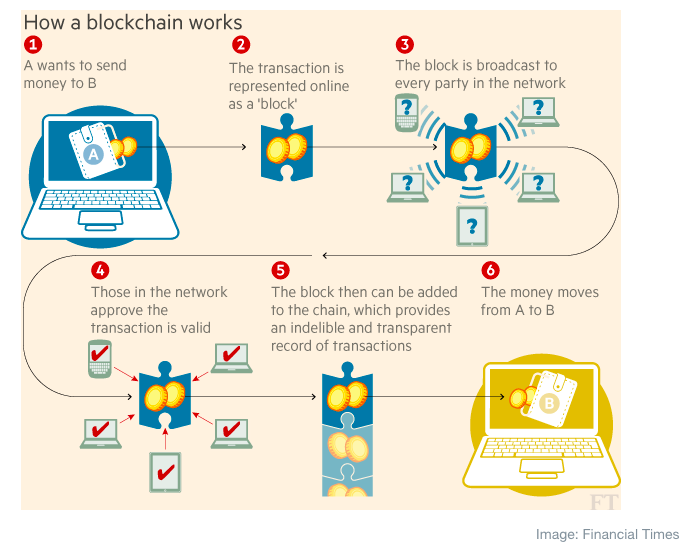
Miners use powerful computers to solve algorithms on the crypto network, and when they successfully solve one, they get to add a transaction, or a block to the blockchain.
Each algorithm that’s successfully solved helps verify a transaction, and in exchange for solving it, the user receives a token.
bitcoin, the first cryptocurrency, hit the market in 2009 and paved the way for thousands of other cryptos in the years since, including Ethereum, Litecoin, and many more.
Learn More:
The Rise of Cryptocurrency
The value of cryptocurrency has caused governments, banks, businesses and individuals worldwide to take notice. alone has grown exponentially in value, rising by over $10,000 USD in one year:

Banks and businesses alike are seeing the benefits of digital currency and the blockchain technology that supports it. And consumers are demanding support.
, and within six months they processed approximately $15 million in bitcoin transactions!
This means that crypto transactions could eventually become the norm as the technology continues to gain traction among banks, businesses, and consumers alike.
 All About Digital Wallets
About are created every month, and it’s expected for this number to continue increasing as digital wallet technology continues to become more accessible and easy for the average person to use.
But what’s a digital wallet?
It’s a software or app that stores private and public keys, or unique identifiers that mark ownership of cryptocurrency tokens. In a way, digital wallets are analogous to decentralized, unregulated bank accounts.
Many digital wallets are currency-specific, such as , which only stores and spends bitcoin. But others are capable of holding multiple currency types for added convenience.
The digital wallet makes cryptocurrency accessible to both business owners and customers and it takes just minutes to set up. The exact process varies depending on the wallet, but generally, the user needs to:
Choose a wallet solution: Popular choices include , both of which support multiple cryptocurrency types.Download the software client and follow the installation instructions.Encrypt the wallet, usually with a one-click option on the software client.Install the mobile app for on-the-go access to funds and transactions.
It’s an easy process, even for business owners who don’t have previous cryptocurrency experience.
Related Content:
Which Businesses Accept Cryptocurrency?
Companies large and small are accepting cryptocurrency. There are hundreds of thousands of businesses, online and brick-and-mortar, that accept digital currency from customers. In Japan, it is estimated that. That’s just one country!
Have businesses seen any benefits from accepting this new form of digital payment? Absolutely.
From online travel to house cleaning services, more and more industries are adopting cryptocurrency. Microsoft, Sears, Subway, Home Depot, Tesla, Shopify, ReMax, OverStock.com, and more are all accepting digital currency. Check out this list of specific .

The benefits of using bitcoin and other cryptocurrencies are substantial, and include:
Increase in new customer traffic: Customers who are passionate about cryptocurrency want to spend it, and they’ll choose stores that accept it when given the option.More repeat customers: Customers love knowing that business owners listen to them and take their pain points into consideration, including payment types.Faster processing times: Cryptocurrency transactions are capable of taking place at near-instant speeds, so there’s less wait time between making a sale and seeing the payment clear.Better control over cash flow: When payment withdrawals take place so quickly, it’s much easier to control cash flow and avoid the struggle of waiting to get paid.Who’s Using Cryptocurrency to Make Purchases?
If you have reservations about accepting cryptocurrency for your business, it is essential to think about the consumers of the future, Generation X, Millennials and the newest age bracket, Generation Z (born between the mid ’90s and early 2000s)!
For example, in 2015 at 75.4 million strong, according to Pew Research Center. And at outnumber the Millennials by about one million!

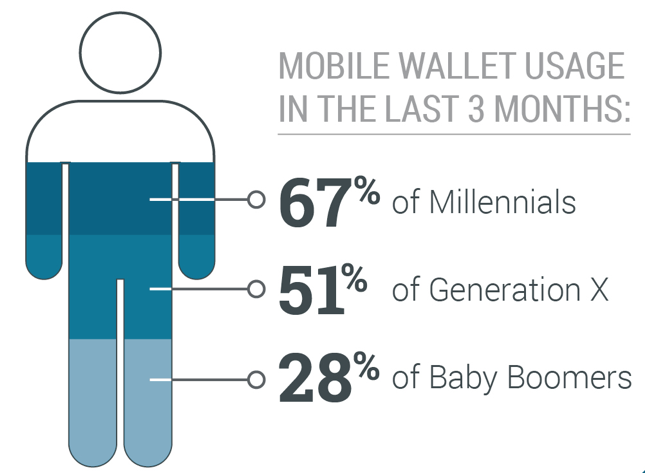
Guess who is using digital currency? Generation X, Millennials and Generation Z. Research by found that Millennials opened 67% of digital wallets, followed by Generation X with 51%.
Any shift in technology demands a response from businesses, and it’s especially true when it comes to the evolution of payment acceptance. And it’s been seen time and time again: when credit cards became the norm over paper money, when e-checks became favored over paper, and most recently when digital payment apps like PayPal and Google Wallet became popular.
Why You Should Accept Cryptocurrency on Your WebsiteEverything Is Going Digital
The growth rate of cryptocurrency and the adoption of blockchain technology by businesses may be the final nail in the coffin for paper transactions. Most businesses and banks are already moving toward digital only, and as accessibility and popularity for digital currency grows, it is likely to be the future.
bitcoin is one notable cryptocurrency. However, other currencies are on the rise, such as Ethereum, Litecoin, and DASH, which are all bitcoin competitors.
Why You Should Accept Cryptocurrency on Your WebsiteEverything Is Going Digital
The growth rate of cryptocurrency and the adoption of blockchain technology by businesses may be the final nail in the coffin for paper transactions. Most businesses and banks are already moving toward digital only, and as accessibility and popularity for digital currency grows, it is likely to be the future.
bitcoin is one notable cryptocurrency. However, other currencies are on the rise, such as Ethereum, Litecoin, and DASH, which are all bitcoin competitors.

This indicates that digital currency is on the rise and will not slow down anytime soon. The very nature of the blockchain makes peer-to-peer digital transactions possible without a financial institution middleman.
Cost Effective Business Transactions
Businesses lose a lot of profit due to middleman transaction fees. The average business pays fees for credit card acceptance directly to the credit card company, on top of fees for using a third-party payment processor. This can add up fast.
However, the blockchain technology that supports cryptocurrency can cut out the middleman, thus increasing your profits.
According to the, PIN-authenticated transaction costs can be as high as $0.25. The “average interchange fee per exempt transaction” is between $0.26 and $0.51 per transaction.
Real-Time Digital Currency Exchange
Waiting for your funds to process can be frustrating, especially if your operating costs are high. By accepting cryptocurrency on your website, you can avoid long transaction times. Typically, digital currency transactions occur in real time, or within minutes.
do depend on the type of currency you choose to accept. For instance, bitcoin Cash is slightly faster than bitcoin transaction times. Ripple takes up to five seconds, while Litecoin processing takes two to five minutes.
Businesses that accept digital currency can get instant gratification on every customer purchase. Each transaction is also more secured due to the blockchain verification process.
More Secured Transactions with No Chargebacks
For each and every transaction, a block is created, verified, secured, and enforced. This protects businesses from chargebacks, because customers need to show proof of funds before the transaction is completed. This is far superior to traditional transaction processing currently in place.
Enter the Global Marketplace
Cryptocurrency adoption makes international transactions easy by minimizing the cost and time involved in processing them.
You can accept payments internationally with cost-effective fees and little to no processing wait times. This makes your business a go-to for many digital currency holders abroad.
By accepting cryptocurrency, you are also able to make payments to international vendors easily. This can cut international purchase costs for your products, impacting your bottom line in a very positive way.
From gaming to medical marijuana, there are a number of industries already benefiting from digital currency adoption. It is even profitable to have a to create a passive income for your small business.
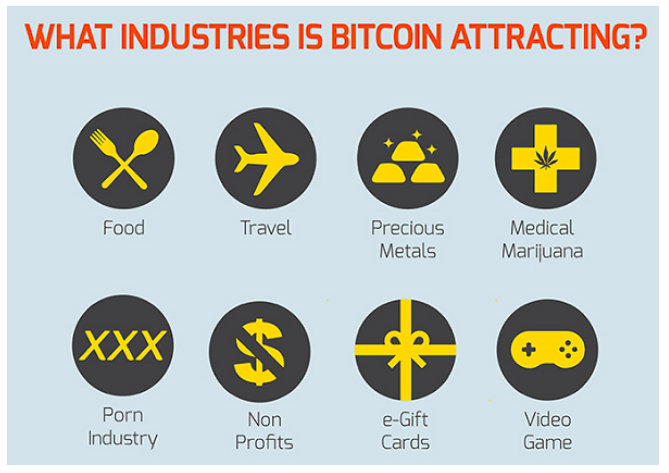
If your business is in any of these industries, it is essential to your future success to implement a cryptocurrency payment option on your website.
Learn More:
How Do You Adopt Cryptocurrency for Your Business?
Accepting cryptocurrency as a form of payment on your website is actually easier than you may think. The popularity and growth of digital currency for businesses has made setting up your merchant account, integrating it into your Points Of Sale (POS) system, and making it accounting friendly can be achieved with little tech knowledge and stress.
The exact process varies somewhat depending on the solution you choose to use, and there are dozens out there.

is a preferred solution among business owners and crypto enthusiasts alike for a few reasons:
Supports most of the “big players” in crypto, including bitcoin and LitecoinSupports over 130 altcoins (you choose which ones you want to accept)Low fees compared to credit card processorsUser-friendly setup experience
Here’s how to go about the setup process with :
Step 1: Set Up Your Merchant Digital Wallet
First things first, you’ll need to set up a merchant digital wallet. First, you’ll create an account.
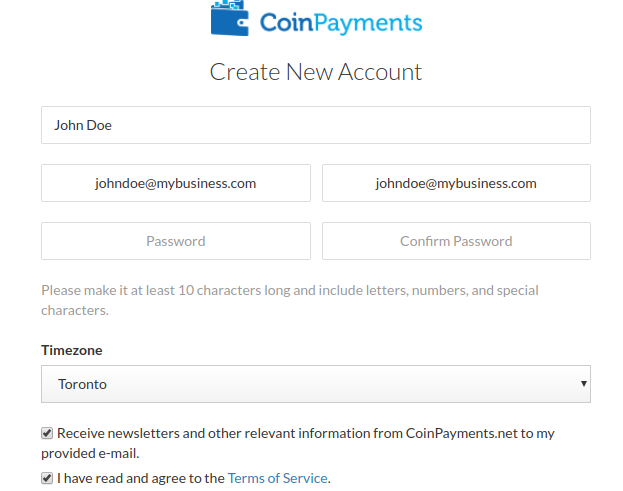
Upon creating the account, the next step is to create the merchant digital wallet.
CoinPayments supports digital wallets for both merchants and consumers, so make sure to choose the merchant option.
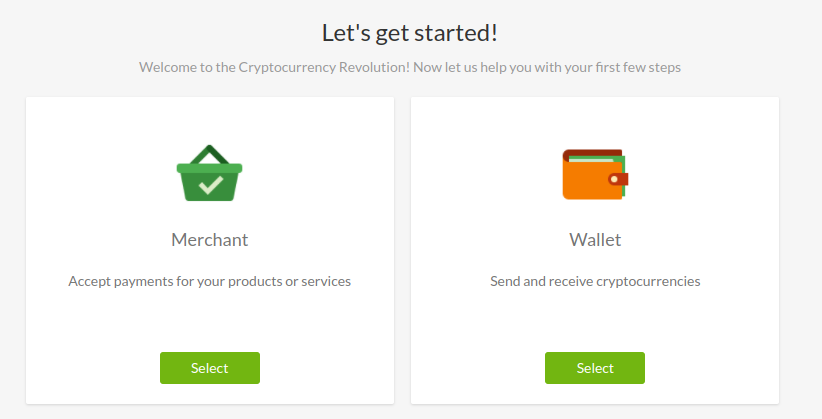
Next, you’ll be prompted to select which currencies you’d like to accept.
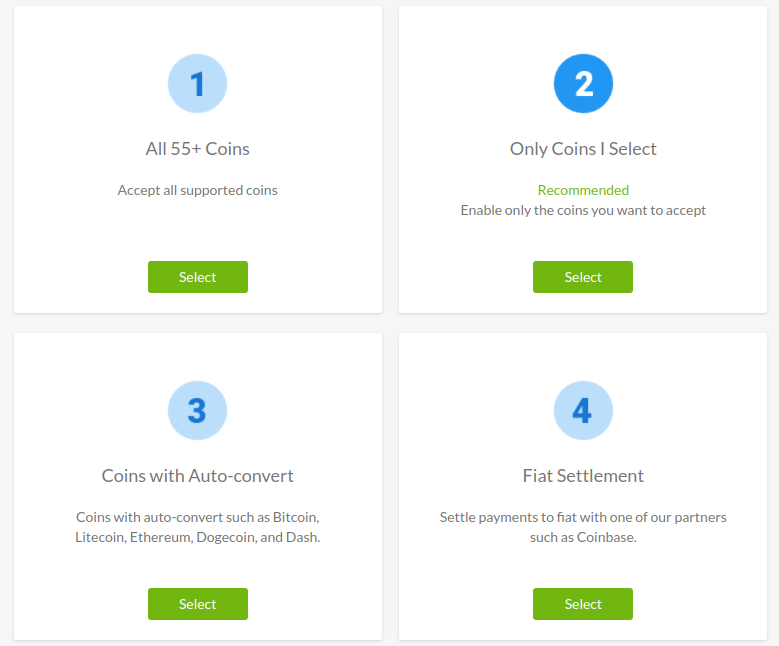
Congrats! Now your merchant digital wallet is ready to go.
Your merchant digital wallet will have a unique 26–35 string of characters and a QR Code. This allows customers to make purchases by sending payments to your digital wallet.
You can accept one digital currency or several, depending on your personal preference. All transactions are converted to cash, so there is no restriction on the cryptocurrency you’d like to accept for your business.
Step 2: Integrate Cryptocurrency into Your Points Of Sale (POS)
Once you have your merchant digital wallet set up, you will receive a public address, private key, and QR Code. Now you simply integrate them into your POS system, online shopping cart, and invoices, both digitally and physically, using your QR Code.
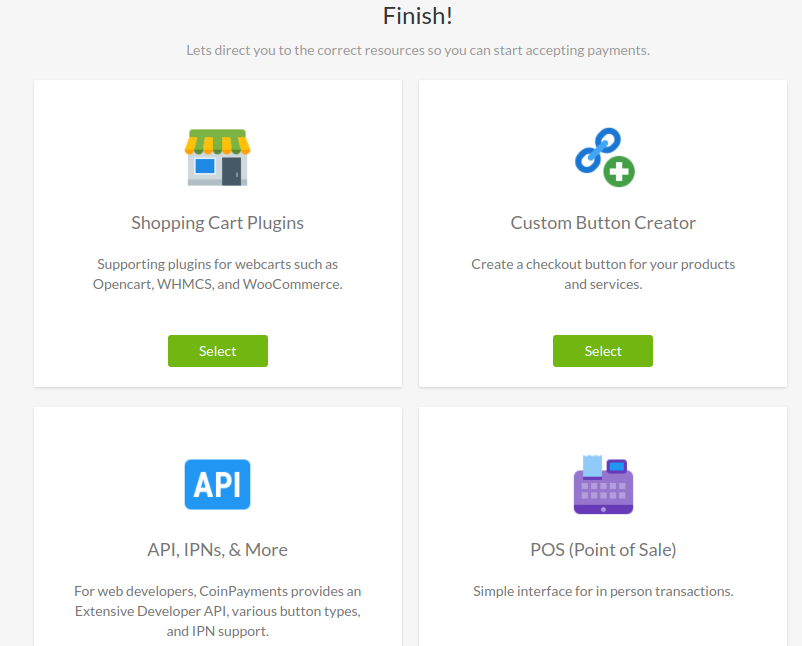
The CoinPayments website offers step-by-step instructions for each type of integration, so don’t be intimidated! This portion of setup doesn’t need to take longer than an hour for all integrations, and you pick and choose which integrations you need.
Step 3: Make Transactions Accounting-Friendly
For any transaction, digital or not, you will need to integrate it into your accounting system. If you use QuickBooks, you can easily integrate your cryptocurrency transaction. Most merchant digital wallets will offer support on how to manually import your digital transactions if you don’t use accounting software.
Capitalize on the Currency and Consumers of the Future
Take your business to the next level and secure your growth and success for the future. With Millennials and Generation Z more likely to use cryptocurrency, and benefits of peer-to-peer transactions in favor of the business owner, it is time to take the next step. Adopt digital currency and introduce a form of payment that will set you apart from your competitors.
"SKILLCHAIN CAREERS AND CERTIFICATION"
Being able to “go beyond the information given to figure things out” is one of the few untarnishable joys of life.
— Jerome Bruner, The Culture of Education
According to the United Nations Human Development report, the notion of work is broader and deeper than that of "jobs" or “employment”.
The report went further to explain that Jobs provide income and support human dignity, participation and economic security. But Jobs framework is restrictive.
It fails to capture many kinds of work that are more flexible and open-ended, including care work, voluntary work and creative expression, such as writing or painting. What about the business start-ups, SMEs and other private owned businesses? So in this perspective, work is very complex, diverse and varies from place to place.
It can be paid (wages or salaries) or unpaid (volunteer or free work), formal or informal and can occur in different circumstances and also reflect different contexts, views, opinions, quality, quantity, preferences and demands.
As it is with the case of work, so it is with that of the place (environment) and circumstances where such work is being performed.
Careers encompasses—Jobs, Employment, Unpaid care work, Voluntary work, Creative works and Expressions; so is the condition, environment, place and climate in which such work is rendered differs; and the circumstances surrounding the “workplace” or the “workplace climate”.
So, as far as this notion is concerned, there are certain unchanging principles and practices, creativity and innovative skills, effective communication skills and collaborative skills required for any thriving career(s).
Careers and the work world are changing dramatically at an exponential rate due to globalization and technological revolution and is directly and indirectly changing the context of work and required skills.
It is no longer a case of nature and nurture but rather a case of nature, nurture and technology. The drivers of this transformation in careers are majorly due to globalization, digital revolution, global connectivity, interdependence and the blockchain technology.
21st Century Careers and Recruitments:
From SKILLCHAIN Whitepaper, "Industry 4.0" or the "fourth industrial revolution", it was captured that new technology, digitization and new production models are fueling new careers, skills and the consequent revolutionary workplace and recruitment processes.
Efficiency, productivity and new skills are are revolutionalizing careers and the pace of change takes place by moving from a cultural revolution to a structural one, which fundamentally revolves around having the courage to change in order to stay marketable.
The goal of industry 4.0 is to create new jobs that are the result of a high degree of cooperation between workers and technologies. Such that candidates need to be more technologically savvy and remain competitive in order to be relevant.
The table below shows the number of works or jobs that are most and least likely to be replaced by automation:
Least likely to be replaced:
Recreational therapists
2. First-line supervisors of mechanics, installers and repairers
3. Emergency management directors
4. Mental health and substance abuse social workers
5. Audiologists
6. Occupational therapists
7. Orthotists and Prosthetists
8. Health and social workers
9. Oral and maxillofacial surgeons
10. First line supervisors of fire fighting and prevention workers
11. Dieticians and nutritionists
12. Lodging managers
13. Choreographers
14. Sales engineers
15. Physicians and surgeons
16. Instructional coordinators
17. Psychologists
18. First-line supervisors of police and detectives
19. Dentists
20. Elementary school teachers, except special education
Most Likely to be replaced:
Telemarketers
2. Title examiners, abstractors and searchers
3. People working in sewers
4. Mathematical technicians
5. Insurance underwriters
6. Watch repairers
7. Cargo and freight agents
8. Tax preparers
9. Photographic process workers
10. New account clerks
11. Library technicians
12. Data entry keyers
13. Timing device assemblers
14. Insurance clames
15. Brokerage clerks
16. Order clerks
17. Loan officers
18. Insurance appraisers
19. Umpires, referees and sport officials
20. Tellers, bank tellers
Source: Frey and Osborne 2013. Permitted by UN 2015 Human Development Report
The question is, are you prepared to respond and adapt to the challenges of the emerging world of work?
The Whitepaper further depicts that new players have emerged on the heels of this trend: job boards (LinkedIn, Monster, Indeed) are platforms that operate on a global market, seeking to meet the required demands of speed, automation and specialization.
As a matter of fact, in 2017, the social network LinkedIn, primarily used to build professional contacts, topped 530 million registered users who put their curriculum vitae (CV) on their public profile, including details of their academic career and relevant work experience.
The tools to advertise a candidate's skills for use by recruiters and employers are essentially based on self-declaration, which is called a CV (or resume) and sometimes fake credentials. Anyone can write a CV with both true and false information, without the possibility of being certified and verified! (SKILLCHAIN White.paper )
The speed of technological penetration into careers and consequent need of the 21st century skills and ingenuity is the objective of SKILLCHAIN.
SKILLCHAIN seek careers, institutions and individuals to be adept and adaptable to this change—new technology, new policy, virtual reality, augmented reality, new products or practice, new market strategy, new learning and information management using the blockchain technology and Smart contracts.
SKILLCHAIN on the Blockchain Infrastructure:
Blockchain infrastructure is a data structure that are immutable but can only be added to, inform of blocks. One data connects to each other on the infrastructure.
As such any changes on one of the data blocks affects the other data. As an openly distributed ledger, which has value, the SKI token was created to enable peer-to-peer trustless transactions.
It is connected such that before any new data is added or mined it must confirm its validity by proof.
Such data can be in form documents or credentials on the blockchain. Documents such as business agreement documents, education certificates, land deeds, births, marriages or other important documents can be entered into the database.
So it isn’t possible to be hacked or faked. Blockchain, with databases split into hundreds of millions of servers, will ensure that the agreement is automatically executed, recorded, and stored in a decentralized, secured and transparent manner for all concerned.
Skillchain protocol will be utilizing this new technology from blockchain to adequately certify all past and present experiences of individuals or personalities and permits academic institutions around the world to interact quickly and easily, certifying students' career paths, the qualifications they earned and exams they took.
Skillchain’s goal is to bring clarity to the work world by making sure that candidates' resumes are not merely based on self-declarations, but are the result of certified and swift interactions with the institutions they come from.
The protocol would be accessible to Universities and vocational training schools and simulation learning/training companies to store data such as diplomas, e-learning courses, and in-class personal development and experiencial training programs.
This is the most effective and efficient means of communicating, transiting and storing personal data securely and transparently; and subsequently accessed by its owners or by person’s authorized to do so.
Everything is connected, fueled by digitization, new technology (blockchain) globalization, mobilization, augmentation, and automation; careers has gone beyond creating profits to you becoming a problem solver through acquired skills as a “means” to new careers.
SKILLCHAIN protocol will alongside look into an institution’s educational curriculum to see if encompasses the 3R (Relevance, Rigor and Relatedness) equating courses and career path’s of individuals with new technologies and different "working climates".
> What is the relevance (or goal) of this course (or "education")?
> What are the processes (or rigor) involve with this discipline?
> Are they in tone with my learning preferences’, personality and interests?
> What linkage do this discipline has with "Industries 4.0", if any?
> How is this course related, applied or used to solve a problem in the real world?
To benefit from the 21st century workplace, "industry 4.0" and the new workforce, requires multiple careers which are trans-disciplinary, interdisciplinary, and interdependent and a commitment to lifelong learning…that is what Skillchain Life Skill Passport is all about.
Again, according to the Whitepaper; SKILLCHAIN will globalize the Life Skill Passport, through which everyone will get a personal profile which certifies their academic credentials, participation in vocational training courses, their skills, previous work experience and recommendations received.
It will be user-friendly, quickly accessible, and subject to the profile owner’s desire for privacy, just for a start.
This application can incorporate any certifiable skill, people’s career paths, or even personality test results of candidates embarking on any career path.
The challenge is to create a single place where those who wish to be admitted into a training academy, people applying for a job or participating in non-academic or vocational training courses can look up their own track record, while simultaneously making it available to parties who request access to LIFE SKILL PASSPORT.
The LIFE SKILL PASSPORT will be a world market standard in education and work. Accuracy and transparency of data stored therein will be the new standard for CVs.
This Blockchain-Based document will incorporate users' career path certificates, as well as Blockchain-Based work experience references.
By means of a basic URL, users will be able to substantiate their career path and education credentials in a definitive and unquestionable way to ensure a transparent and genuine presentation.
Skillchain’s vision is one of an ecosystem where certified workers can easily own, manage and monetize their verified skills (user profile) as well as data from their LIFE SKILL PASSPORT experience.
As a decentralized career network, it will be able to translate references and verify appeal into a brand new C.V
The Underlying SKILLCHAIN Structure:
The platform allows users or server owners to access and change their data through security and data extensions.
Extensions can be used through a browser to help users connect or access the skillchain platform. The API will be used as an interaction medium for extensions to interact with Skillchain underlying structure.
With a security extension that is created to clarify and validate whether it contains destructive behavior, this security extension uses bytecode validation as a tool for a completely new scope of commercial applications and applications for blockchain technology. It can also remove the necessary intermediaries in commercial transactions(p2p).
Skillchain making use of the trustless blockchain infrastructure and Smart contracts will have four type of contracts to facilitate the operation as thus:
> Data Storage Smart Contract
> User Profiles Smart Contract
> Employer Profiles Smart Contract
> Public Training Institutions Smart Contract
> Token Smart Contract
Skillchain will be based on the Ethereum wallet and other major blockchains for a start before launching it’s own platform.
The wallet will have the capacity to detect blockchain automatically and utilize the currency required to operate in the environment. Trusted purses on this network can securely transfer funds to one another in a way that prevents losses incurred by mistakenly sending crypto to a non-existent address.
HOW IT WORKS:
Skillchain platform using API can be accessed following any of these:
> Verified Skillchain extension
> Website and,
> Mobile apps
Finally, Skillchain will develop data analytics feature that is embedded with artificial intelligence in order to perform thorough analysis about the job market, high-paying job, or even provides some suggestions about which employer that suitable for the user based on their skillset and previous working experiences.
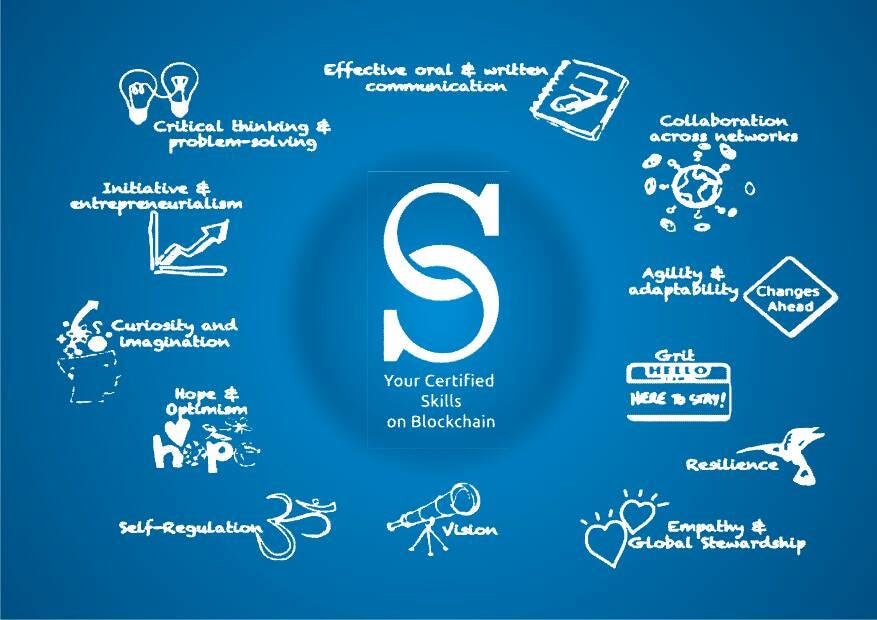
AiLink, the social platform in blockchain era, is coming for you! 50 million ALI tokens are airdropping in a limited time, first come, first served! Invite more people and get more ALI tokens, you should never miss it!
Activity link:
Participate in steps:
1. Open activity link in browser, enter your wallet address, binding and withdrawal.
2. Copy the verification code, join the official telegram group: , and send the verification code to the group to activate your tokens.
3. Return to the browser page and copy the invitation link to invite your friends, you could also get additional 50 ALI tokens award for each successful invitation.