
The world has changed, the emerging new world is causing people to want more, start searching, start demanding from the life of new resources, new deals, new currents. Cryptocurrency comes into this world as an iconic step. Iconic Steps, that humans are developing and do not want to stand in the same place again. We all encourage each other for change, for new achievements, for a new level of living qualitatively. A new world with a new set up demands changes to the systems and resources we use. That’s why we want to introduce your unique attention in its kind. One platform, which will unite everyone around the world. Let’s talk together!
Problem Of Market :
Market experienced cosmic grow from the beginning of 2017. For 1st of January of 2017 total value of all cryptocurrencies haven’t been exceeding 18 billion of US dollars. Cryptocurrency boom means accretion of big amount of capital. Despite that fact no one has prepared community for the future. In particular, nobody was expecting such impetuous growth. Just think about it: 1600% just in 12 months. Year 2017 has become a runaway for bitcoin, its forks and altcoins. Such a rough growth of cryptocurrency market is demanding an opportunity for using it in reales world. Exactly for that purpose AKAIITO is created. From 1000 owners of cryptocurrencies not more than 50 are really using it. There is nowhere to actually use it. Problem of the market is obvious.
Solution for the Problem:
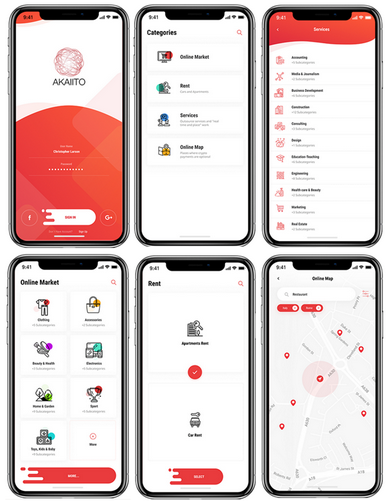
AKAIITO is complex of platforms united in one resource, which is allowing to live in real world by using new currency cryptocurrency. This is unique opportunity to buy goods, to rent cars and apartments, to use different services and help of specialists from nanny to lawyers, by using crypto money.
Token Sale :
The AKAIITO project will issue AIC token with exchange rates of 1 ETH = 1000 AIC (or 1 AIC = 0.001 ETH) at pre-ICO. This AIC Token will be used as a currency for all transactions in the AKAIITO application. To purchase, you can use Ethereum wallet that supports ERC20 token
Total token distribution:
Volume: 30,000,000 AIC (maximum)Sales: 75% -> unsold token wont be issuedMarketing: 7%Consultant: 3%Developer: 15%ICO AKAIITO will be divided into pre-ICO and ICO which both have different bonuses
Pre-ICO:
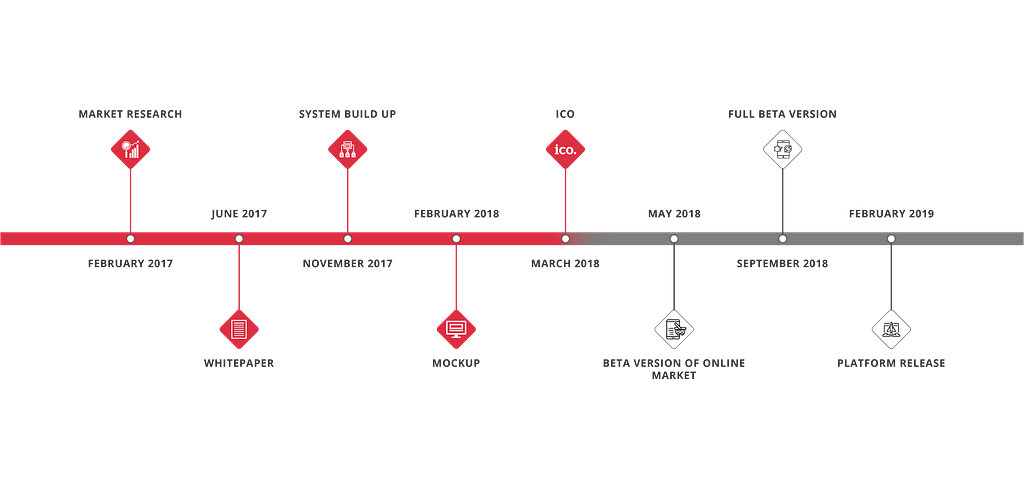
Volume: 1,000,000 AIC (maximum)Price: 1 ETH = 1,000 AICMinimum purchase: 0.01 ETH (10 AIC)Bonus: 60%Period: 12–02–2018 to 25–02–2018 (14 days)
Ico:
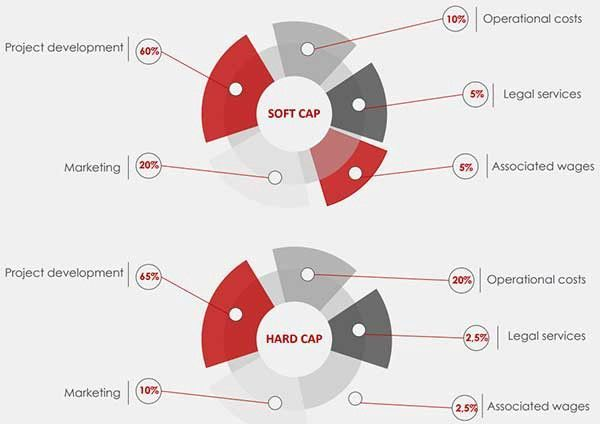
Volume: 21,500,000 AIC (maximum)Price: 1 ETH = 1,000 AICMinimum purchase: 0.01 ETH (10 AIC)Bonus: 40% (first 48 hours), 30% (first week), 20% (second week), 10% (third week), 5% (week four), 0% (5th week ff.)Period: 10–03–2018 to 15–04–2018The ICO has two different funding allocations, with a soft-cap of 1,000 ETH and a hard-stamp of 20,000 ETH
App Akaiito:
Roadmap:
For More Informatiom:
Official Website :
Twitter :
Facebook :
LinkedIn :
Telegram :
Instagram :
YouTube :
Created By:
Username Bitcointalk: totoprayogo
Link Profile BitcoinTalk:
My Ethereum Wallet: 0xBBAf4608D26483e6457b245A860DB590340F89A2

Blockchain technology has great potential for better equalization of financial opportunities, opening funding and investment to a much wider audience than traditional patterns of accredited investment currently allow.
But openness has its dark side. One person might be singing the glorious praises of the freedom of blockchain…another might be instigated into launching a tirade about black markets, drug money, terrorists, and money laundering. Perhaps this is no surprise in a space where money is made on philosophy and dreams just as much as on fundamental technological innovations.
bitcoin has managed to make a lot of rich folks richer and a lot of poor folks poorer. There have been crypto millionaires, and crypto paupers. There have also been plenty of scams. The Ethereum blockchain in particular has seen myriad debates about the relative merits of immutability and unassailable privacy versus using an approach where every transaction is kept honest by subjecting it to 3rd party official oversight.
Is it possible to find just the right amount of regulation?
The latest divider in the Crypto world has been the need for regulatory action. Granted that the freedom loving Silicon Valley is somewhat of a skewed sample, but we’ve been constantly surprised over the last few months as we walk into conferences and find people pleasantly agreeing about how they feel about the president, only to watch the animosity grow as the conversation turns to crypto regulation. We’ve even made the mistake of broaching the subject ourselves on occasion — some of the looks have been nothing short of withering. Everyone has an opinion, most people have the ‘facts’ to back it up, and nobody — nobody — has the answers.
As time goes on, people gravitate towards one of the three places on the spectrum: full regulation, no regulation, and moderate regulation. What’s less clear is why each perspective has its individual merits and detriments. Here’s a brief primer of pros and cons.
Full Regulation
The proponents of full regulation come in all shapes, sizes, and origins, running from consumer protection watchdogs to crypto-haters to rationalists. The basic premise backing this goal tends to be, on some level, societal — un-or-softly-regulated crypto presents a bona fide threat to the stability of the world as we know it.
Broadly speaking, this threat can present along two fronts: financial stability and consumer protection from fraud and theft.
Crypto has tremendous implications for traditional finance. The technology offers a completely new way to fund projects, and build early equity. Historically, these activities have been limited to only a handful of accredited individuals or institutions, but the low-fee, inherently divisible, and more accessible token economy changes opens this up.
With crypto, anyone can be a part of bootstrapping a new venture, and can buy in as much or as little as they see fit. Token Sales are typically ‘public’ (or, at least, are functionally much more public than IPOs) and allow for individuals to buy small amounts of what it essentially equity in a company.
However, this openness has drawbacks. The traditional financial institutions are currently still our only gateway to many other highly important resources. Crypto has a decent chance of shaking up such things as wealth distribution, securities availability, and even the way we pay for goods, but our economy depends on much more than these things. If the metaphorical Wall Street were to collapse tonight, many key companies would tumble along with it — and crypto still can’t build cars, innovate technological hardware, or even do things like offer safe mortgages.
Our economy isn’t made up of discrete nodes so much as it’s an interconnected web. We can’t risk one pillar falling and taking everything else out on its way out.
These implications are not necessarily intuitive, which is perhaps a decent illustration of why regulation with an eye towards consumer protection is not unreasonable. Greed causes humans to do inexplicable, irrational things, and this is especially true when the upside is as high as what we’ve seen with crypto. People will do things that are bad for them, act against all reason, and sacrifice the long term for the short term. It’s possible that the vast majority of those buying cryptocurrencies are uninformed about the consequences of their actions, or, if they are informed, may be willing to risk the collapse of the financial system in order to turn a quick profit. Perhaps more saliently, they may be willing to risk their own financial ruin for the chance at making a few bucks, and this is infinitely more concerning.
But this is a macro analysis. On the micro level, similar situations arise, with consequences that hit closer to home. There are two truths about the world: One, very few situations are truly equitable. Wealth is a zero-sum game, and things tend to shake out such that a few people have it while most don’t. And two, there are people out there who will act unethically to ensure that they’re the ones who end up with the wealth. We’ve seen this in the cryptosphere in the form of Ponzi schemes, empty ICOs, and outright scams. Perhaps the most famous of these is BitConnect, a coin that peaked with around a 3 billion dollar (USD) market cap before collapsing completely. In the months leading up to their demise, many individuals were calling it out as a shady project, but people were still buying in — either out of ignorance or in the hopes of riding the wave up and finding a bigger fool before the crash. Some even threw their entire net worth at BitConnect, only to watch it all vaporize.
Throughout all of this, one lesson has become clear: consumers often don’t know what’s good for them. Whether we’re risking the global financial system or our own life savings, greed can blind us to the rational course of action. Sturdy guardrails are sometimes necessary to protect us from ourselves.
No Regulation
In contraposition to the push for full regulation is the argument that crypto ought to be left to fend for itself, entirely unregulated. This argument is most in keeping with the philosophical underpinnings of crypto: an anonymous, global, almost anarchist movement.
The potential for no-regulation is there — coins are global, decentralized, and at least quasi-anonymous…blockchain immutability is the government. This built-in will for anarchy presents a huge headache for regulators, who find themselves having to either coordinate (notoriously difficult on a global scale) or fight the metaphorical battle against nature.
This is not to say that the anti-regulation movement is purely logistical. There are some good reasons to let things shake out naturally, chief among these being the survival of the fittest argument. Unquestionably, crypto is new technology, and it still has some maturing to do. There will be some mistakes, sometimes on the scale of millions of dollars (or, occasionally, hundreds of millions of dollars). But, in a way, these mistakes force evolution.
Safety nets in various forms have been proposed, and while myriad arguments on both sides surround the issue, the conversation invariably ends up circling around to these very concerns. If crypto is regulated, aren’t we just somewhat arbitrarily closing the gap between “good” projects and “bad” projects? Aren’t we imposing a localized, government-derived ‘seal of approval’ on some projects over others? Even more worrisome, isn’t it likely that the coins that are even able to be regulated skew towards the centralized, the mutable, or the non-anonymous?
Further bolstering this position is the reasonable fear of crypto bubbles. Unquestionably, blockchain-based currency as an asset class has had one of the most meteoric rises in recent memory. This has fueled speculations of a bubble, which some say has popped — but nobody knows for sure. What is more clear is the fact that a bubble is a much more real fear in the crypto world than in traditional finance. Like it or not, regulations offer a de facto endorsement of a product, and this product is… volatile.
There are reasons to avoid putting some cryptos in a “safe” class and some in an “unsafe” class, because realistically, none are truly safe. Whether or not a government intends for regulation to be seen this way, this is how some people will interpret it. The end result of this could be people buying in who haven’t done sufficient research, or are perhaps not familiar enough with the technology to keep their coins safe. Given how many individual purchased unregulated cryptos in late 2017, the risks are huge if a government marks some tokens as “unsafe”, implying that the others are safe.
Who has the foresight to see into the future, or to see into and judge the virtues of particular projects? Governments are unlikely to limit their regulation at just barring or restricting some coins. Any regulation is likely to come along with a whole slew of other legislation. If regulating some cryptos causes citizens to purchase these unsafe assets, we will quite possibly see government bailouts and even more hands-on regulation. While the slippery slope argument usually doesn’t hold much water, those against regulation in any form have a good point in this case — history suggests that government involvement will only increase as more people lose their money. Patterns of crypto regulation will likely mirror our securities framework, and this is not an environment in which crypto can survive. If this is a true possibility, perhaps regulations writ large are undesirable.
Quasi-Regulation
There is a middle ground between traditional regulation and anarchy: clearly-defined quasi-regulation. The kind of regulation that isn’t susceptible to an increased “creeping forward” of guidelines, but still provides some safety to consumers.
One possibility is to adopt an information mechanism, and regulate information rather than practices. For example, consider any well-known “scam coin”, perhaps one that is essentially a ponzi scheme. Regulating the actual practices would require a government saying something such as, “tokens whose governance model resembles these structures aren’t allowed to be bought or sold in our jurisdiction” — or worse, “only coins that closely follow such-and-such model are allowed”.
This likely stifles innovation, and moves away from the (arguable) philosophy of crypto, while also not letting such winnowing mechanisms as ‘survival of the fittest’ operate, meanwhile boxing in a potentially world-changing technology, and not allowing the free market to organically value companies and practices. Consider instead, that governments allow these companies to operate and innovate, but mandate specific flows of information.
A huge majority of scams can be avoided given the appropriate data, and data is undeniably essential to making a good decision. So perhaps the market could benefit from an open release of governance structure information, token cap (or lack thereof) data, or transparent information about core data (team, jurisdiction, etc). This doesn’t block any of the benefits of crypto, and still allows the consumer to make a free choice. Some people will still fall for scams — the only difference will be, they had every opportunity to avoid them entirely. An open-data model seems to have all of the positives with none of the drawbacks.
A real-world analogy may be the Food and Drug Administration (FDA). Broadly speaking, the FDA allows for harmful ingredients to be put into food; often things that reasonable people would classify as doing more harm than good — various plastics, fats, even addictive substances are allowed to be sold in grocery stores all across the country. Ostensibly, this is preserve freedom of choice. The FDA doesn’t want to overstep their bounds, but they do want to ensure that if an adult chooses to buy, say, a pack of cigarettes, the adult has an easy way to inform themselves about their decisions. The adult can ignore the surgeon general’s warning, and overlook the fact that this product contains tobacco and nicotine, but they can’t claim that the information was never accessible to them.
It may not be advisable to buy a token with a completely anonymous team, with no product, a whitepaper riddled with spelling errors, an unlimited token supply — but some adults will buy in if they can see the dollar signs. Perhaps the government doesn’t need to ban such shady enterprises altogether… perhaps they just need to make sure the consumer has access to the data that would reveal if something is amiss.
Another possibility is just an attempt at softer regulations — this is somewhat of an uphill battle, as it will probably take the coordination of many governments to build a fully effective system. The tough question, then, is how much regulation is acceptable? Too little, and we build a haven for scammers who will be able to take advantage of the the unfounded trust in the system. Too much, and we chilled innovation, potentially either killing the movement on a global scale or possibly allowing for a small number of loosely-regulated countries to pull ahead of the rest. Where to set this bar?
Seemingly we as a society just don’t know what the best way to proceed at the moment — and this may be an unsolvable problem. In the USA, we don’t even know how to classify tokens, let alone how to regulate them properly. Are they securities? The SEC sure seems to think so. Property? Sure, according to the IRS. They’ve also been variously classified as commodities, money, and “other” by a whole slate of other regulatory bodies. This is not an environment in which quasi-regulations will thrive, but it’s definitely possible given a lot of cooperation and foresight in developing them.
Conclusion
There are a few different approaches to crypto regulation, ranging from the minimal to the extreme. Most have their merits drawbacks, and all suffer from the uncertain future of blockchain technology as a whole. What seems true, however, is the tremendous potential for these innovations to have a significant impact on humanity. This is not an opportunity to be squandered — rather, it’s an opportunity to come together, think critically, and build something amazing.

