Can a logo symbolize the ethos of a project? An industry? An entire movement?
This is perhaps too much meaning to attribute to any one design, but if any logo has come close to the task, it’s that of bitcoin.
Belonging to no corporation, no in-house graphic design team at a shiny Silicon Valley startup, bitcoin’s logo has given the faceless project’s many adherents an image to hold on to. And not only to hold on to – but to emblazon on shirts, stick to laptops and stamp on physical coins – giving the digital project a material existence that has been crucial for its propagation.
Perhaps more importantly, the collaborative development of bitcoin’s unofficial logo framed its encounter with the rest of the world.
In creating a symbol that resembled those of other currencies, bitcoin was visually introduced to newcomers as money. And in elaborating this symbol into a logo that could reside alongside Visa and Mastercard stickers on shop windows, bitcoin was simultaneously and distinctly established as a payment method.
But bitcoin’s current logo is far from its first.
The story of the bitcoin logo, much like the cryptocurrency itself, is one of evolution, one of facelifts, community collaboration and – occasionally – of controversy.
January (or March?) 2009
The earliest iteration of the logo was rendered by pseudonymous bitcoin creator Satoshi Nakamoto himself shortly after the software’s launch and featured a BC on a gold coin.
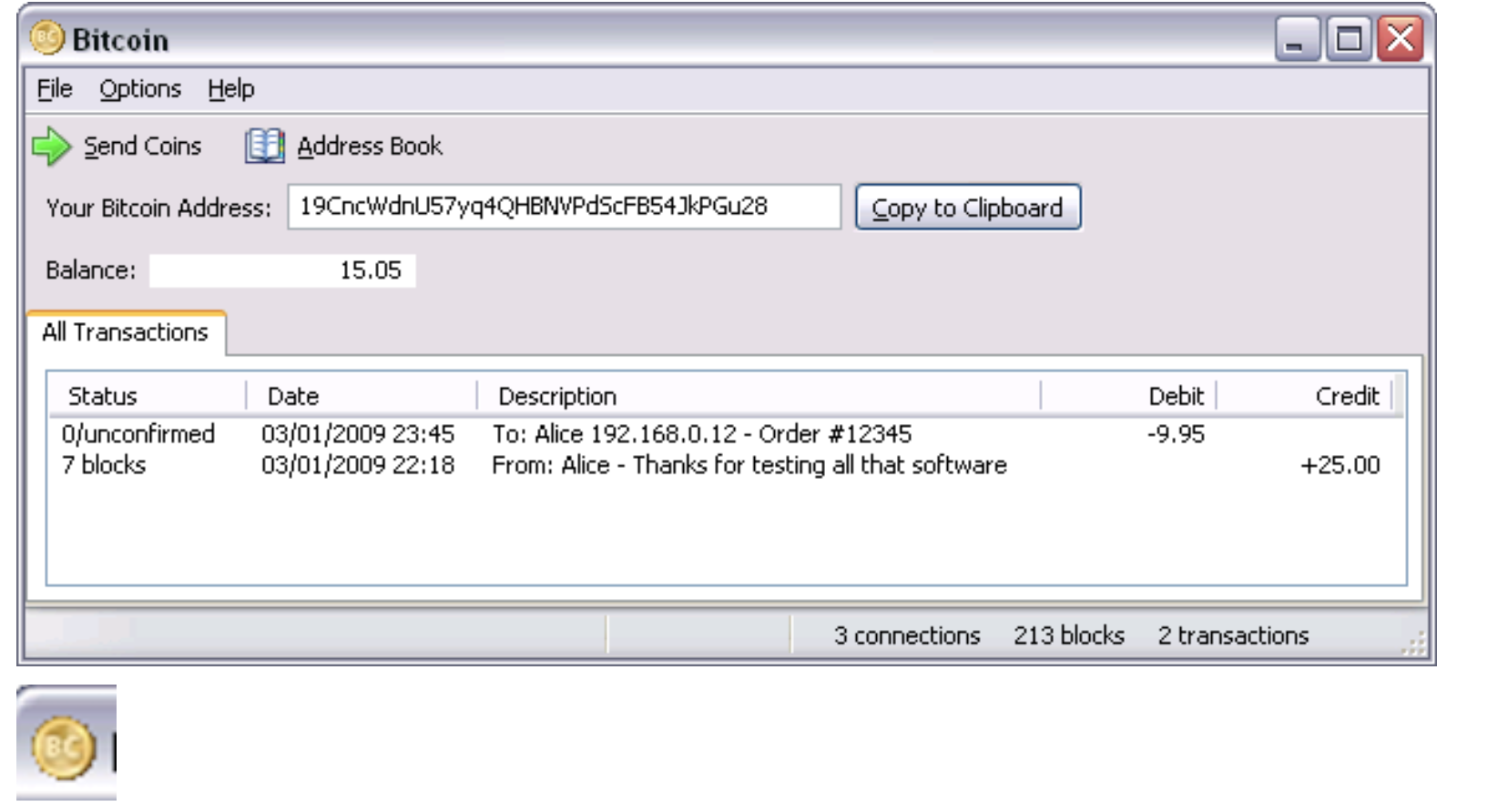
Little is known about the original logo, as its creation predated the popular bitcoin Talk forum. However, it is notable that in imitating the appearance of a gold coin, the icon references metallism. This monetary system, in which the value of money is derived from the exchange value of the commodity on which it is based (like gold or silver), is an ideal to which many bitcoin enthusiasts subscribe.
, it’s difficult to tell whether users appreciated the original icon or not. Some users proposed alternatives to “BC” such as the Thai baht symbol and the ampersand, while others suggested a combination of both the Thai baht symbol and the Costa Rican colon symbol.
Several users suggested adding a T to the symbol – making it BTC – which remains the ticker symbol for the cryptocurrency today.
Other users, however, argued that it was unnecessary to adopt a standard symbol at all.
“The spirit of bitcoin is that there is no need for a central authority or ‘official’ policy as with other currencies,” one bitcoin Talk user, Timo Y, wrote, adding:
“We should just let it evolve organically, like a word in a natural language.”
February 24, 2010
Satoshi continued to experiment with the logo.
his original graphic over a year later, shedding the “BC” in favor of the now ubiquitous “B” with two vertical strokes.

The logo was largely well-received by bitcoin Talk users. However, some objected that the new “B” resembled the Thai baht symbol too closely, and worried that it could create confusion. Others criticized the design for its lack of professional polish.
One such user wrote, “Is there a reason we couldn’t adopt something else before bitcoin gets too big and it’s too late to change without hurting ‘brand’ recognition? It seems silly to stick with something that is ‘ok’ when we could have something great.”
November 1, 2010
Out of thin air – that’s effectively where bitcoin’s most recognizable logo, and its creator, came from. With on bitcoin Talk, a still unidentified user going by the handle “bitboy” forever changed the visual legacy of bitcoin.
However, you wouldn’t know it from his humble message:
“Hi guys, just drop by to say hi and to share with you some of the graphics I have done. Hope you will find them useful.”
And useful they have been. Orange, flat and off-kilter, these graphics are widely utilized and riffed upon today.

Bitboy transformed Satoshi’s original concept into a more readable, scalable logo that was more brand-able than a simple gold coin. And this seems to have been intentional. Bitboy’s comments on bitcoin Talk suggest the designs were created with something akin to marketing in mind.
Paradoxically, though, bitboy was inspired by some of the companies bitcoin hopes to unseat.
When another bitcoin Talk user commented that the designs resembled the Mastercard logo, bitboy replied, “That’s the inspiration. The irony is as much as I hate [Mastercard] and [Visa], it is all about perception when it comes to consumer confidence and behavior. Lol”
The logo’s nod to Mastercard hasn’t been the only push to define bitcoin as a payment method, and the comparison has since created additional pressure for bitcoin and its developers as the project has had to contend with its scaling limitations.
The appeal of bitboy’s designs has also arguably been crucial to the commodification of bitcoin. A Google search suggests bitcoin merchandise has become a burgeoning industry, with more than 11 million results for the search term “bitcoin merchandise” and 34 million results for the term “bitcoin t-shirt.”
April 2014
Still, not everyone has been on board with bitcoin’s de facto logo.
Some, like those behind have been campaigning for years to change it. In fact, they don’t want bitcoin to have anything akin to a logo.
“It’s a unique image file, just like it could be used by a company to sell or promote a product,” the website, which was created by graphic design studio ECOGEX, objects. “Currencies are represented by symbols like $, € or ¥, aiming to be used everywhere by everybody.”
As such, the group advocated for the adoption of the Ƀ, which is a letter in multiple alphabets including that of Latin and several languages in Vietnam.
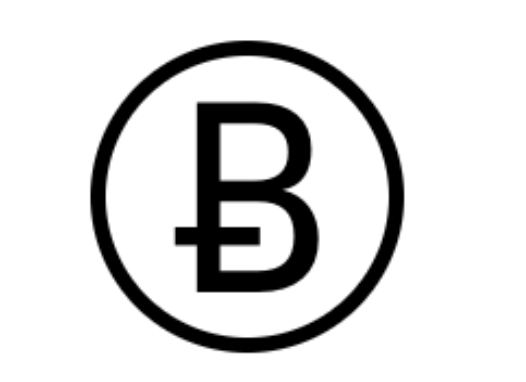
Speaking to their reasons, the group argues, “As a widely distributed, peer-to-peer digital currency, bitcoin needs an open-source graphic identity, designed with open source software by and for the community.”
October 31, 2016
It wouldn’t be bitcoin without a bit of controversy, however.
This particular controversy began to brew during the fall of 2016, when Phil Wilson (who uses the handle ‘Scronty’) , claiming that he was one of three persons collectively comprising Satoshi Nakamoto.
While Wilson lacks blockchain-based evidence for this – such as the private key to move old funds linked to Satoshi – he published extensive instructions on how to construct both Satoshi’s second gold coin logo and the bitboy’s logos.
These directions were part of a lengthy account of bitcoin’s early history that was later published by Wilson on a dedicated website. The elaborate nature of his story prompted some in the crypto industry to wonder if Wilson was, in fact, part of a team that created the bitcoin software.
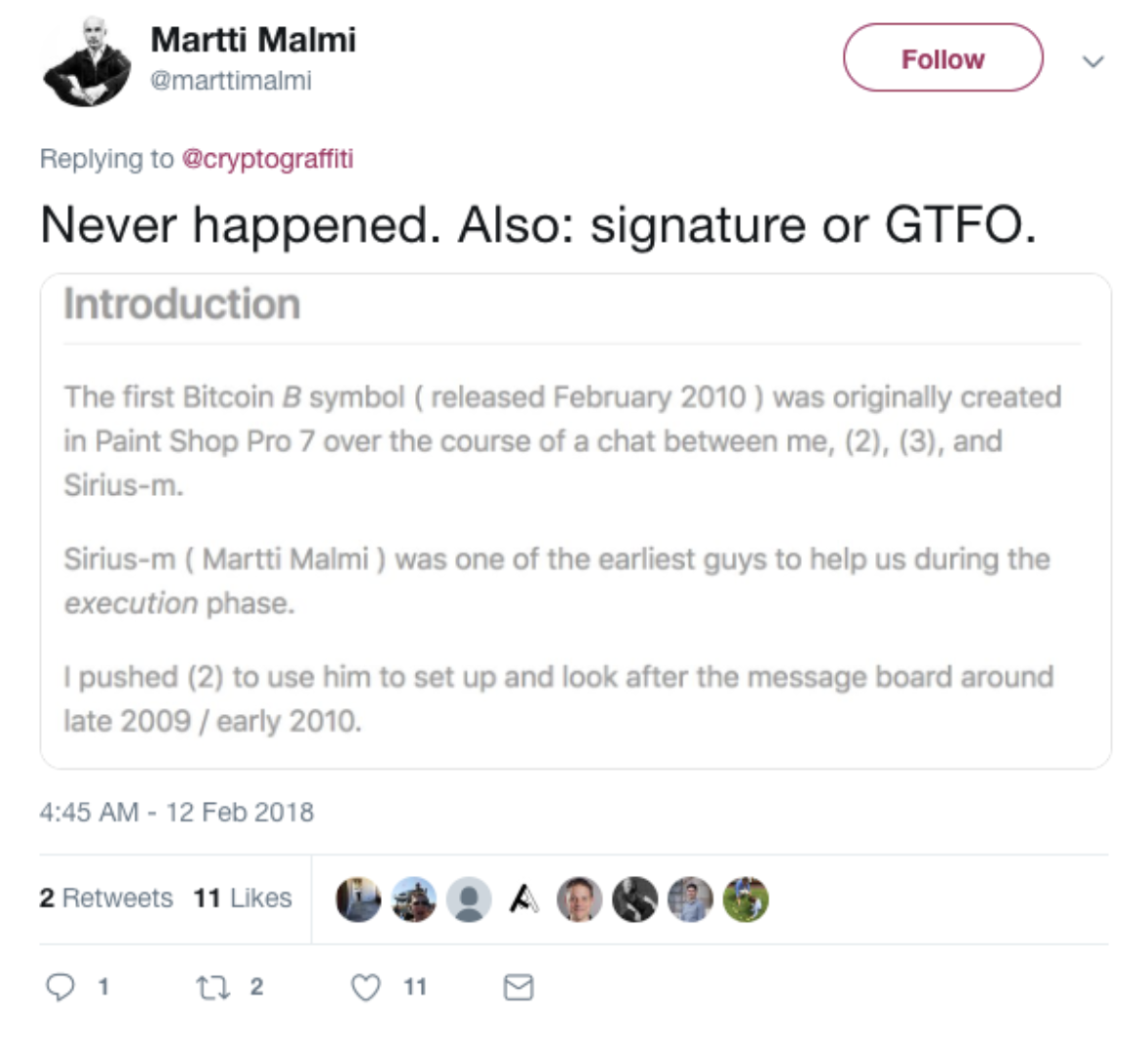
Yet, Wilson also alleged that Martti Malmi, the second-ever developer of bitcoin who is also known as “Sirius,” helped with the execution of the second gold coin logo.
But Malmi has denied any involvement, leading many to suspect that Wilson’s claims amount to nothing more than extensive fan fiction about bitcoin’s origin myth.
bitcoin image via CoinDesk archive
Published at Sat, 18 May 2019 10:20:46 +0000