This article is an addition to multiple attempts making a case for investing in . It talks about very high-level macro factors that make the case for investing in .
Banking is necessary. Banks are not.
Value investing is based on an assumption that the value, and thereby price, of the underlying asset, follow its quality. As the asset quality increases, the price increases. Somehow, S&P500 has been an exception to this understanding. Since 2009, the S&P 500 posted about 300% increase, which was in no measure justified by the quality of these stocks. This chart shows how the price rise was not backed by quality.
But then why did the prices increase? Largely because of the liquidity infused by the central bank. The QE that started in March 2009, ‘pushed’ all the stocks up. This shows that a central bank doesn’t really care about rewarding ‘good quality’ companies. They rather want to save the ‘bad quality’ companies from going under. Central banks across the globe have ‘too big to fail’ list and these companies will be saved regardless of their actions. In crypto, there is no Uncle Sam to save projects that are not worthy. Though cryptoassets are highly correlated to each other, lately there have been signs of decoupling, where some projects have gained more than others. This is encouraging as ‘natural’ corrections in unworthy companies/projects will be allowed and welcomed by the market. Crypto markets are freer than traditional financial markets, thus probably more efficient.
You can’t seize what you can’t see
There is a subtle difference between money and currency. All money is currency, but not all currency is money. Anything that is money should be a good of value, a currency need not be a good of value, and all fiat currencies in the world are not good stores of value over the long term. Although what ‘long term’ is, is very subjective, we can agree that ‘theft of inflation’ steals the value from currencies. Someone in the US may be okay with storing USD for 25 years, in India they may be okay with storing INR for 10 years and in Venezuela, it will probably be a couple of weeks. This is why gold and silver are revered to be ‘sound’ money. But then why ? What is it that addresses that gold couldn’t? very aptly points that ’s inability to be seized addresses the Achilles heel of gold and other physical assets. Every other physical asset is prone to seizures from government, theft, but is not, as long as you know how to them. The government of the USA, arguably the freest country in the world, had ‘mandated’ citizens to deliver any form of gold they owned (in exchange of ~$20 per ounce) back in 1933. There is no guarantee that it cannot happen again.
The music may stop and it may not warn you
Risk management dictates that investors should diversify their portfolio across different assets so that in case of a black swan event, the downside is protected. This is where assets that offer no correlation with the traditional asset classes play an important role. Cryptoassets are an asset class that has a negligible correlation with all the traditional asset classes. This itself is one of the reasons why institutions across the world are gradually considering to allocate a small portion of their portfolio to crypto. According to , 46% institutions (of the 411 surveyed), find cryptoassets’ low correlation to other assets is one of the most appealing characteristics. is an insurance against the traditional financial system which has looming problems such as low interest rates, ballooning debt (but according to MMT this is not a problem as, after all, debt is nothing but credit from the lenders’ perspective), trade wars, etc. Though one would hope that they don’t need this insurance, they have to have it nonetheless.
We have to distrust each other. It is our only defense against betrayal.
Two recent incidents were very important to that national governments cannot always be trusted to take measures that only benefit the citizens. Though was of no apparent use to mitigate these two disasters, there could be immense learnings from the two incidents. First is Venezuela. In 2018, inflation in Venezuela crossed 1,000,000%, yes one million percent. This was a result of corruption, capital control, self-serving policies, price fixing, and extreme reliance on oil exports (which turned against them as the oil prices plummeted). Due to lack of infrastructure such as continuous electricity supply (there are frequent power cuts across the country) and a stable internet connection, lack of financial and computer literacy, etc. could not help Venezuelans to the desired extent.
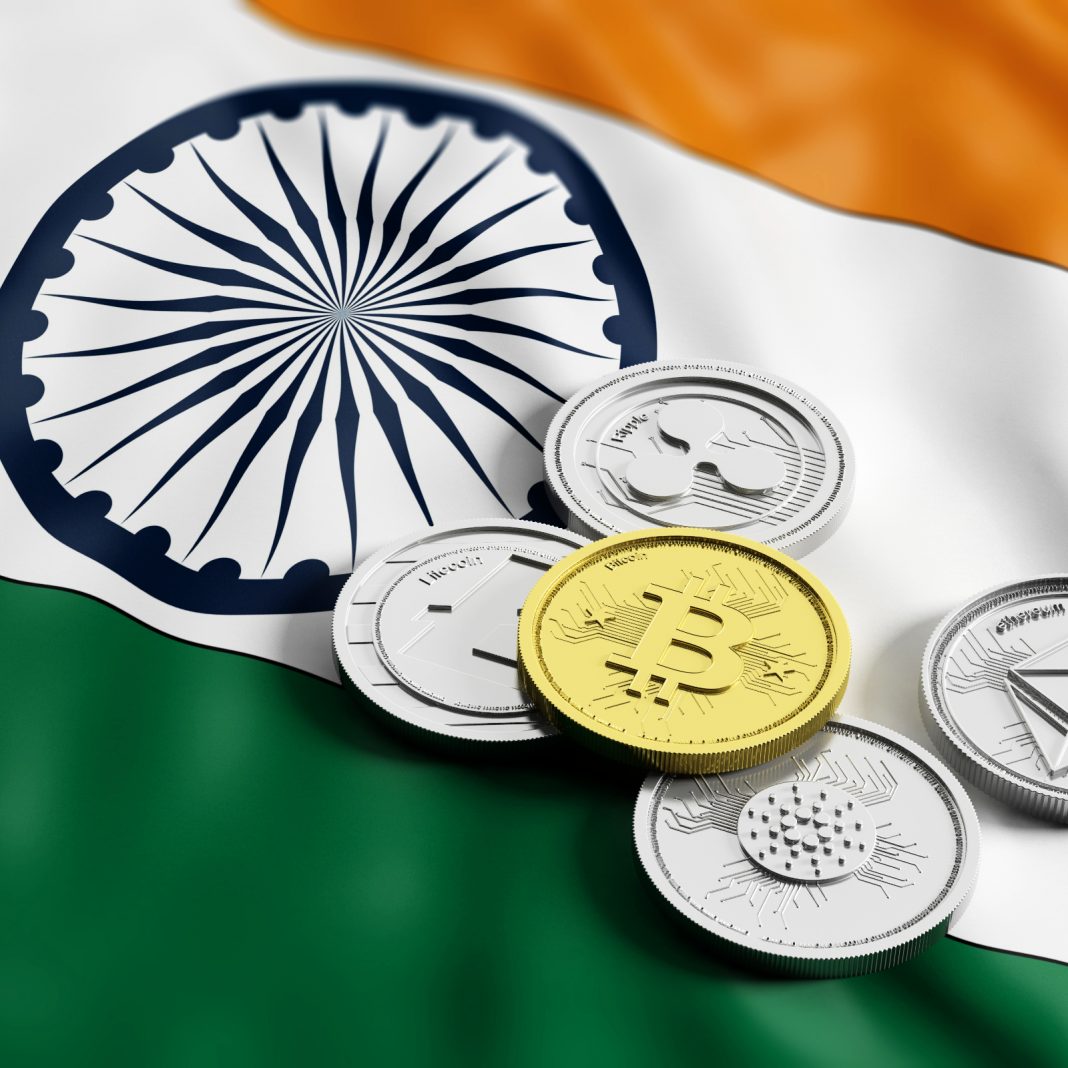
The second example is India, one of the fastest growing major economies. On November 8th, 2016, the PM of India announced demonetization of INR500 and INR1000 government issued notes. This decision rendered 86% of the currency worthless overnight. As a consequence of this decision, one could not withdraw more than INR2000 from their bank accounts. And in a country like India which is primarily a cash economy, this was a nightmare for average Indians. Had there been awareness about , the impact could have been mitigated.
Why pay more when you can pay less?
In 2018, India received $80bn in remittances, the highest, from the rest of the world, but paid around 3% i.e. $2bn in fees. Recently, Bitcoins worth more than $200mn were moved for fees less than $1. Though fees vary, countries can save billions of dollars in remittances fees every year if they use .
The Times They Are a-Changin’
At the end of the day, money is a collective belief system. There are a lot of mainstream fanatics who argue saying that does not have any ‘intrinsic’ value. Well, neither does any fiat. Fiat works because everyone believes in it or the government that issued the fiat. , the average lifespan of fiat currency has been about 27 years. conducted in the US states that 59% people from the age group 18–34 ‘believe’ that is a positive innovation and 48% ‘believe’ that most people will be using 10 years from now. We have seen the trend shift from owning to renting in the last few years and it has given birth to likes of Uber, Lyft and Airbnb. People do not like to engage in maintenance activities. There is a great chance that the same people will opt for a different type of money where they don’t have to keep a track of their credit cards and bank accounts. The change in ‘belief’ may prove to be one of the biggest catalysts of widespread of and eventually some other cryptoassets.
To sum up, if our financial system is the Titanic, is the lifeboat. One should hope they don’t need the lifeboat, but they must always have it. has already withered a number of attacks and survived, and came out stronger every time. It proves that money works on trust and it need not always be government backed.
Published at Tue, 07 May 2019 20:59:38 +0000