January 25, 2026

Capitalizations Index – B ∞/21M

5 Arrested in $1 Million Bitcoin Strong Arm Robbery Conspiracy
5 arrested in $1 million bitcoin strong arm robbery conspiracy

5 Arrested in $1 Million Bitcoin Strong Arm Robbery Conspiracy

Adam James · May 14, 2018 · 1:00 am

The Forsyth County Sheriff’s Deputies have arrested five individuals charged in connection with an alleged home-invasion conspiracy to steal nearly $1 million in bitcoin


Residential Strong Arm Robbery

They say that crime never pays. For five men in Georgia, that was certainly the case.

As reported by 11 Alive, the Forsyth County Sheriff’s Office arrested five men in connection with a conspiracy to invade a Forsyth County home in the hopes of making off with upwards of $1 million in bitcoin, the world’s most popular and expensive cryptocurrency.

The arrests come after a 4-month-long investigation, following the Forsyth County Sheriff’s Office Narcotics Unit’s response to what was initially believed to be a drug investigation at a local hotel. On January 29, narcotics authorities intervened on four males in possession of zip ties, latex gloves, duct tape, and bandanas. The men were released, however, due to a lack of sufficient evidence.

The subsequent investigation revealed that the men were not planning a drug-related crime. Rather, they were after someone’s bitcoin fortune. The four men – Trivette Adams, Matthew Schwartz, Jacob South and Michael McDermont – were allegedly planning to rob a homeowner of his digital currency.

Residential strong arm robbery

Adams and McDermont were apprehended near the Hartsfield-Jackson International Airport in Atlanta before they were able to flee by airplane. The former tried to make a run for it but failed to outrun the deputies.

South and Schwartz, meanwhile, were able to fly out of Atlanta. However, two Major Crimes Unit detectives in Chicago caught up to the criminals and extradited both with help from the Chicago Police Department.

Finally, a fifth suspect, Justin Ellison of Illinois, was arrested on May 11 following an interview conducted by Illinois detectives in connection to the investigation. As noted by 11 Alive:

Trivette Adams, 20, of Pflugerville, Tex., has been charged with residential strong arm robbery and criminal trespass; Robert South, 21, of Norcross has been charged with residential strong arm robbery; Matthew Schwartz, 18, of Hesperia, Calif., has been charged with residential strong arm robbery; Michael McDermott, 18, has been charged with residential strong arm robbery and criminal trespass; Justin Ellison, 20, of Worth, Ill., has been charged with residential strong arm robbery and conspiracy to commit a felony.

Bitcoin armed robbery

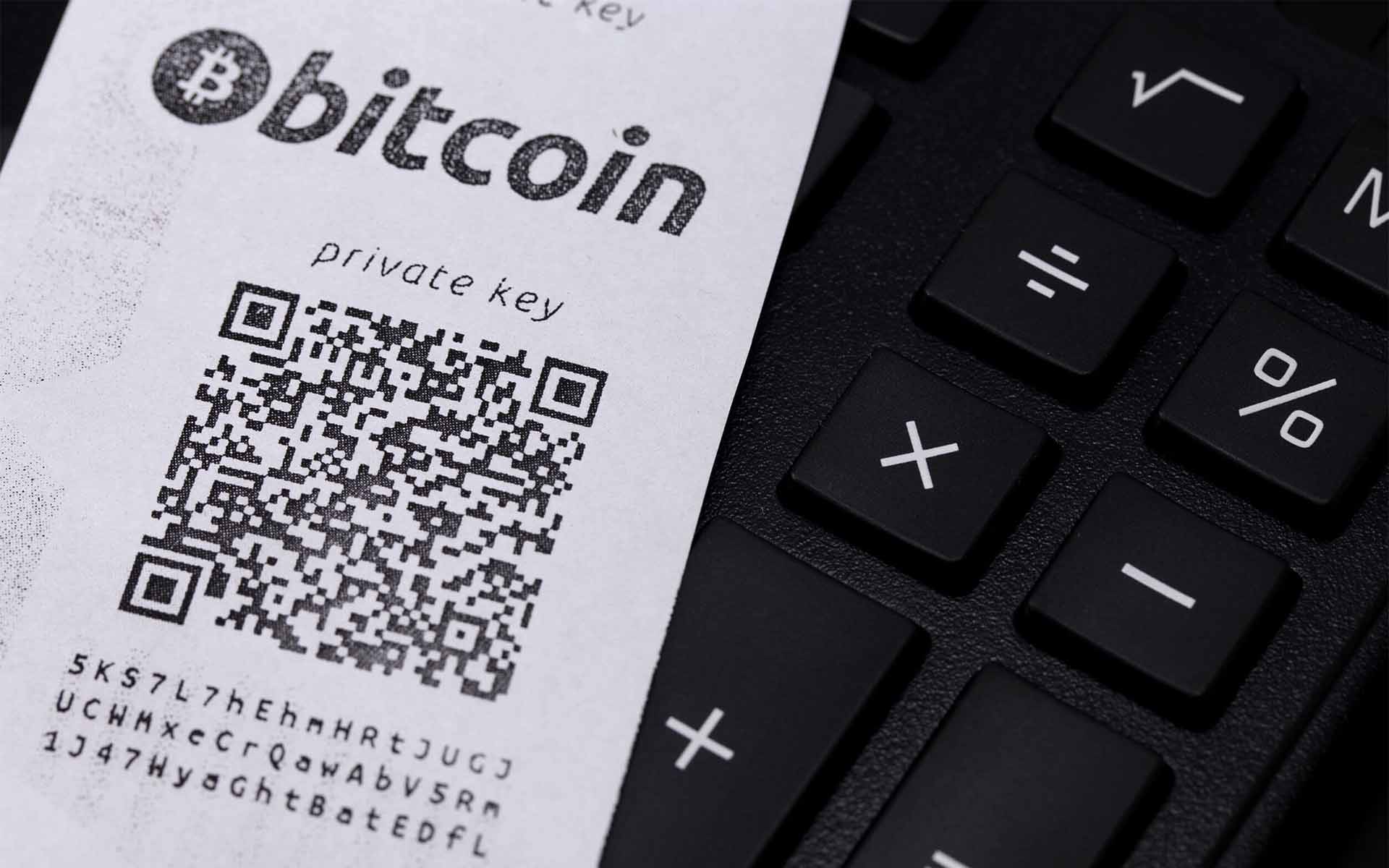
The foiled conspiracy should serve as a reminder to keep not only your private keys hidden, but also keep the contents of said wallets on a need-to-know basis.

What measures have you taken to prevent the criminal theft of your cryptocurrency holdings? Be sure to let us know (or don’t) in the comments below!


Images courtesy of Pixabay, 11Alive.com, Shutterstock

bitcoinBitcoin Crimebitcoin robberyConspiracy Show comments

Published at Mon, 14 May 2018 05:00:38 +0000
bitcoin

Previous Article

Make Your Company ICO-ready

Next Article

Ethereum Price Technical Analysis – ETH/USD Could Recover Further

You might be interested in …

Cardano Blockchain's First Use Case: Proof of University Diplomas in Greece

cardano use case

Greek graduates may soon be able to prove their qualifications by way of a blockchain.

GRNET, the national research and education network of Greece, is working on a pilot project with blockchain research and development company IOHK to verify student diplomas on Cardano, a blockchain that launched in September.

The project is notable because it is the first official use case of Cardano, a proof-of-stake-based cryptocurrency and soon-to-be smart contract platform currently under development by IOHK.

The GRNET app will be built on Enterprise Cardano, a private or permissioned ledger version of Cardano. Unlike a public blockchain, where anyone can join in and participate, a private blockchain allows only a restricted set of users to validate block transactions.

So far, three Greek universities are participating in the project. While IOHK is providing the decentralized database, GRNET is providing the web front end and support and will bring together other universities participating beyond the pilot.

Funding for the project comes in part from Horizon 2020, a European program for research and innovation. Development of the prototype is already under way, Aggelos Kiayias, IOHK’s chief scientist, told bitcoin Magazine.    

Why Diplomas?

Given IOHK’s deep ties with academia, it is no surprise to find the company working on a project that involves universities. But why diplomas?

Putting diplomas on a blockchain takes the paperwork out of the process and makes it easy and simple to check if someone holds a degree.

Typically, when a student graduates, they receive a paper copy of a diploma signed by the dean and co-signed the university’s registrar. All of the students’ transcripts and records are stored in the university’s centralized database.

To confirm that a graduate has the degree they claim to have, an employer has to check the official diploma or call the university. The labor-intensive process makes it too easy for unqualified applicants to slip under the radar.

Putting documents and records on the blockchain eliminates opportunity for fraud in that it allows graduates and universities to “issue a proof that a qualification exists that is undeniable,” said Kiayias. “This is a point of reference that can be agreed [on] by everyone.”

Cryptographic Proof

But to protect student privacy, instead of putting an entire diploma on the blockchain, GRNET plans to put only a cryptographic hash of a diploma on the blockchain.

Digital documents are easy to alter in ways that are undetectable to the human eye. But as long as the digital version shown to an employer hashes to the same output as what is stored on the blockchain, that proves the document is the original, unaltered version.

“We cannot put any plaintext on the blockchain, as diplomas and transcripts are personal information. We only put hashes; we may put entire diplomas and transcripts, but they will always be encrypted,” Panos Louridas, GRNET consultant and associate professor at Athens University of Economics and Business, explained to bitcoin Magazine in an email.

This is not the first effort to store diplomas on the blockchain. In October, MIT announced its own pilot project to verify digital diplomas using the blockchain.   

But Louridas claims the GRNET pilot is different from prior projects in that it stores the entire chain of verification steps on the blockchain. Each step would be recorded as its own immutable transaction on a separate block in the blockchain.  

“You don’t really need a blockchain to store diplomas: a simple system with some digital signatures by the host institution would do,” he said. “We want to be able to record that somebody has asked for proof of a degree, that the proof has been granted, that the proof has been forwarded to a verifier, and that the verifier can verify that the degree is valid, and nobody can dispute any of the above steps.”

The three Greek universities taking part in the pilot include Aristotle University of Thessaloniki, Democritus University of Thrace and Athens University of Economics and Business.


The post Cardano Blockchain's First Use Case: Proof of University Diplomas in Greece appeared first on Bitcoin Magazine.