Privacy is a constant battle between those who wish to increase it and those who would strip it away. Never is this war more apparent than in , where factions with opposing ideals find themselves at loggerheads. On the one side are the surveillance companies that work hand-in-glove with the three-letter agencies, regulators, and governments. And on the other side are the cryptographers and developers seeking to introduce protocols that will bolster ’s privacy.
Also read:
Move Slow and Break Nothing
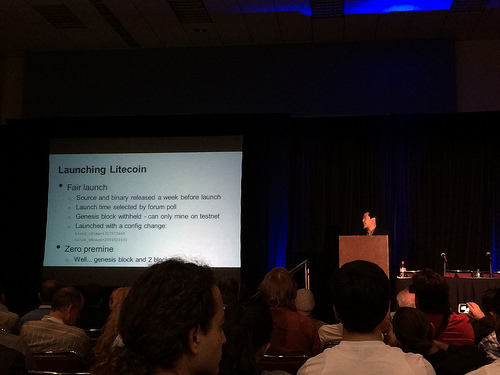
Introducing privacy tech to , which are more centralized than Core and Cash, is relatively easy. Only last week, the Foundation and Beam entered into a with a view to bolstering the former’s privacy. “We have started exploration towards adding privacy and fungibility to by allowing on-chain conversion of regular LTC into a Mimblewimble variant of LTC and vice versa,” ran the agreement. “Upon such conversion, it will be possible to transact with Mimblewimble LTC in complete confidentiality.”
can’t enter into cooperation agreements, because it has no official team members to sign the paperwork. Reaching consensus on Core upgrades is meant to be hard, to prevent aspiring leaders from implementing changes unilaterally. The downside, however, is that major upgrades that have broad support are hard to pass, as even a few dissenting voices can be enough to quell them. A number of privacy upgrades that have been proposed for fall into this category: in theory they should work, but it may be some time – if ever – before they’re incorporated.
Dandelion
Whenever a transaction is sent on the network, it’s broadcast to multiple nodes before a miner picks it up and incorporates it into a block. During the broadcast process, which is known as diffusion, it’s possible for a bad actor operating as a node to trace the transaction back to its origin, from where there’s a high chance of ascertaining the IP address of the sender. is a technology that uses random pathways to send transactions to a variable number of nodes, making it much harder for the sender to be traced.
Chances of implementation into Core: High
Estimated timeline: 12-18 months
Mimblewimble
While Dandelion should make it harder for adversaries to determine the origin of a transaction, it does nothing to enhance onchain privacy: sender and recipient’s addresses are still publicly visible to the whole world, as well as the amount sent and a host of other potential identifiers. One privacy technology that makes all transactions private by default is Mimblewimble, as debuted by Grin and Beam this year.
For technical and political reasons, Mimblewimble is unlikely to be incorporated directly into Core or Cash to enact enforced privacy. There is the possibility of it being bolted on to , however, as a sidechain. This would enable parties to transact privately on a Mimblewimble sidechain, without risking the security of the mainchain or enforcing blanket privacy on users who have no desire for it.
Chances of implementation into Core: Moderate (as a sidechain)
Estimated timeline: 18 months+
Schnorr Signatures
Schnorr is not privacy tech – it’s scaling tech that merges a lot of the input data in a transaction, resulting in reduced size. Schnorr signatures open up the possibility for introducing a host of secondary features that could improve ’s privacy. Coinjoin, in which random transactions are mixed together to obfuscate all parties, is more effective with Schnorr, as transaction fees remain lower, incentivizing wider usage, which in turn strengthens the privacy for all users.
Schnorr is often referenced alongside Segwit, the scaling technology that Core has had in place for over 18 months now. Cash does not have Segwit, but it looks like it could be getting Schnorr signatures. As ..com , they’ve been tabled for introduction to the BCH network, and could arrive as early as May in its next scheduled upgrade. Here, the benefits would again include increased scalability and enhanced privacy.
Chances of implementation into /BCH: High
Estimated timeline: 9 months+ for , 3 months for BCH.
Which of these privacy features do you think will be introduced to or BCH in the future? Let us know in the comments section below.
Images courtesy of Shutterstock.
Need to calculate your holdings? Check our section.
Published at Sun, 10 Feb 2019 06:05:43 +0000